

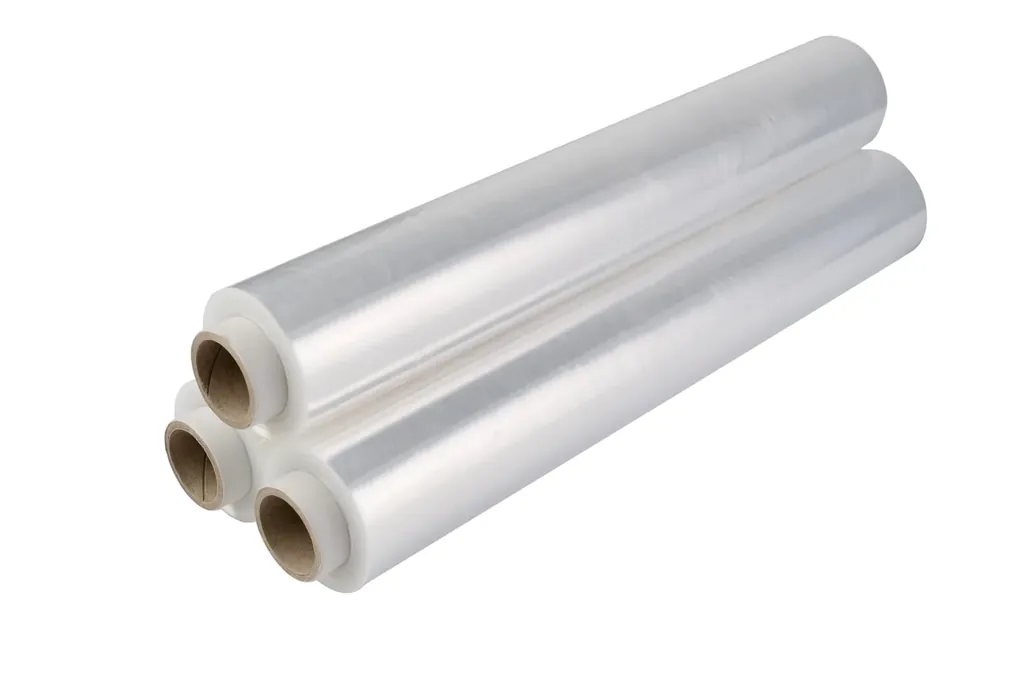
Short answer: cling film must comply with Regulation (EC) 1935/2004 and Regulation (EU) 10/2011 on plastic materials. The legally required document is a written declaration of conformity, which the supplier issues to buyers at every stage except retail sale. The PZH certificate is not required by law, but it is an additional assessment by an independent body. PE film contains no plasticisers, while in PVC film they make up a large part of the mass, so the choice of material matters for fatty foods.
Cling film looks like the simplest product in the kitchen, but in catering, food processing and wholesale it is subject to the same regulations as any food packaging. During an inspection, the sanitary inspectorate (Sanepid) does not ask about the brand of film, only about the documents. Below we have collected the regulations that apply in Poland in November 2026, with article numbers, so that they are easy to check.
What is cling film used for?
Cling film is a thin, flexible film that clings to a container or product and protects food from drying out, loss of freshness, absorbing odours and contamination. In catering and food processing it is used to cover containers of ready meals and to wrap meat, cheese, cold meats, vegetables, fruit and sandwiches, and in wholesale it protects food products before dispatch. It is sometimes called food stretch film, because like stretch film it stretches and clings, but it is a different product: thinner, narrower and approved for food contact. It should not be confused with shrink film, which shrinks under heat and is used for multipack packaging.
Because the film touches food directly, what it is made of and what documents it has matter more than with any other packaging material in the kitchen.
Which regulations apply to cling film?
Film for food contact is regulated by three EU regulations and a Polish act:
| Legal act | Scope |
|---|---|
| Regulation (EC) 1935/2004 | general requirements for all food contact materials, labelling, traceability |
| Regulation (EU) 10/2011 | plastic materials: migration limits, authorised substances, content of the declaration of conformity |
| Regulation (EC) 2023/2006 | good manufacturing practice (GMP) in the production of these materials |
| Act on Food and Nutrition Safety | registration of establishments, labelling in Polish, penalties |
The basic rule is in Article 3 of Regulation 1935/2004: components of the material must not migrate into food in quantities that endanger health, change the composition of the food in an unacceptable way or impair its taste and odour.
What is migration and what are the limits?
Migration is the transfer of film components into food. Regulation 10/2011 sets two types of limits:
- overall migration (Article 12): a total of no more than 10 mg per 1 dm² of film surface in contact with food,
- specific migration (Article 11): separate limits for individual substances, in mg per kg of food, listed in Annex I.
Migration is tested in a laboratory using food simulants that imitate different types of food:
| Food simulant | Composition | Represents food |
|---|---|---|
| A | 10% ethanol | aqueous |
| B | 3% acetic acid | acidic, pH up to 4.5 |
| C | 20% ethanol | with alcohol up to 20% |
| D1 | 50% ethanol | oil-in-water emulsions, dairy |
| D2 | vegetable oil | fatty, with free fat on the surface |
| E | Tenax | dry |
For fatty foods, the result of the oil test (D2) is divided by a reduction factor that depends on the product. For example, by 4 for fresh meat and cold meats, and by 3 for hard ripened cheeses. The test conditions, i.e. time and temperature, correspond to the use. For film used for storage in a refrigerator, testing is usually 10 days at 20°C or at 40°C, and for heating a shorter time at a higher temperature.
Declaration of conformity vs PZH certificate
This is the most common misunderstanding when buying cling film.
The declaration of conformity is a document required by law (Article 16 of Regulation 1935/2004 and Article 15 of Regulation 10/2011). It is issued by the manufacturer or importer and passed on to buyers at all stages of trade except retail sale. As a restaurant, processing plant or wholesaler you therefore have the right to request it. The declaration is renewed when the composition or the production process changes.
Annex IV of Regulation 10/2011 sets out what the declaration must contain, including:
- details of the issuer and of the manufacturer or importer,
- product identification and date of issue,
- confirmation of compliance with Regulation 10/2011 and Regulation 1935/2004,
- information on substances subject to specific migration limits,
- conditions of use: type of food, time and temperature of contact, and the maximum ratio of film surface to quantity of food.
Since 16 September 2026, extended requirements under Regulation (EU) 2025/351 apply, covering among other things non-intentionally added substances (NIAS) and supporting documentation. Products placed on the market before that date may be sold until stocks are exhausted.
The PZH certificate is an assessment issued by the National Institute of Public Health PZH-PIB. The regulations do not require it. Some buyers, however, require it as a contract condition, for example in tenders. For our cling film we issue a declaration of conformity with Regulation 10/2011, and the film also has a PZH certificate for food contact.
In practice, during a Sanepid inspection what counts is the declaration of conformity, and in a tender often the certificate as well. It is worth having both documents for every film you use.
How should cling film be labelled?
According to Article 15 of Regulation 1935/2004, the product or its packaging must bear:
- the words "for food contact", an indication of use or the glass and fork symbol,
- where necessary, recommendations for safe use,
- name and address of an operator established in the EU,
- batch marking that allows the origin of the product to be identified (traceability under Article 17).
Labelling must be visible, legible and indelible. On the Polish market it must be in Polish.
PE or PVC cling film?
There are two types of cling film on the market: polyethylene (PE) and polyvinyl chloride (PVC).
| Feature | PE film | PVC film |
|---|---|---|
| Plasticisers | none | contains, typically about 1/3 of the mass |
| Cling | good, in newer films close to PVC | very good |
| Fatty food (cheese, cold meats, meat) | no limitations arising from plasticisers | plasticisers can migrate into fat |
| Plasticiser migration limit | not applicable | e.g. DEHA 18 mg/kg, total plasticisers up to 60 mg/kg |
Plasticisers give PVC film its elasticity and cling, but they migrate into fatty food. That is why migration limits for PVC film are tested especially for cheese, cold meats and meat. PVC film that meets the limits is permitted on the market. In 2025 the Polish Ministry of Health, replying to a parliamentary question about PVC film, stated that sanitary inspections had not confirmed any hazards and that the manufacturer is responsible for compliance through the declaration of conformity.
The practical conclusion: for fatty food, choose a film whose declaration of conformity explicitly covers fatty food (simulant D2). PE film contains no plasticisers, so this problem does not arise. We produce our cling film from polyethylene.
Can cling film be heated?
Only under the conditions stated in the declaration of conformity. The regulations do not give one general rule: whether the film can be used in a microwave or with warm food depends on the time and temperature at which the manufacturer tested migration. The cling film declarations we know of usually exclude ovens, grills and combi steamers. If the declaration says nothing about heating, do not heat the film.
Which cling film thickness should you choose?
As a manufacturer of cling film and of the cores we wind it on, we produce PE cling film in two thicknesses, 30 cm wide, on a ∅38 mm core:
| Thickness | When to choose |
|---|---|
| 9 µm | covering containers, more metres per kilogram |
| 12 µm | heavier products, greater tear resistance |
We agree the roll length when you order, because we make the cores ourselves. Rolls are packed 4 to a carton. You will find the parameters on the cling film page.
Frequently asked questions about cling film
Does cling film need a PZH certificate?
No. The regulations require a declaration of conformity with Regulation 10/2011. The PZH certificate is an additional assessment that some buyers require. For our cling film we issue a declaration of conformity, and the film also has a PZH certificate.
Who must have a declaration of conformity for cling film?
The manufacturer or importer issues it, and every operator except a retail shop passes it on. Restaurants, processing plants and wholesalers have the right to request it from their supplier.
How does PE cling film differ from PVC?
PE film contains no plasticisers. PVC film contains a lot of them, and plasticisers can migrate into fatty food. Both are permitted if they meet the migration limits.
Can cling film be used to wrap cheese and cold meats?
Yes, if the declaration of conformity covers fatty food. Check the type of food and the contact conditions in it.
How does cling film differ from stretch film?
Cling film is approved for food contact and is used to protect products. Stretch film is used to wrap pallets, is 10-30 µm thick and works at high stretch. We produce both from polyethylene.

About the author
Katarzyna Wójcik
Sales department, cling film, Dominopack
She works in the Dominopack sales department. With customers buying cling film, she agrees the thickness, width and length of the roll and prepares a quote.
Sources
- Regulation (EC) No 1935/2004, Articles 3, 15, 16, 17, eur-lex.europa.eu, CELEX 32004R1935
- Commission Regulation (EU) No 10/2011, consolidated text of 14.07.2026, Articles 11, 12, 15, Annexes I, III, IV, V, eur-lex.europa.eu, CELEX 02011R0010-20260714
- Commission Regulation (EU) 2025/351 (changes to the declaration of conformity, NIAS)
- Commission Regulation (EC) No 2023/2006 (GMP)
- Provincial Sanitary and Epidemiological Station (WSSE) in Gdansk, Food contact materials, gov.pl
- Reply of the Polish Ministry of Health to parliamentary question no. 13928 of 19.12.2025, sejm.gov.pl
- Canton of Aargau, Frischhaltefolien für Käse, 2017, ag.ch
- Dominopack data: cling film, dominopack.pl/folia-spozywcza.html, as of November 2026